Mohamed Salah’s Dropped xG Streak Reshapes Egypt’s 2026 Attack Plan
For most of the past decade, Egypt’s attacking plan has been simple: give the ball to Mohamed Salah and let him solve the problem. That approach carried the Pharaohs to the 2018 World Cup and within a penalty shootout of the 2022 edition. But as the 2026 tournament approaches, Salah's expected goals per 90 has dropped from roughly 0.62 in 2023–24 to around 0.51 in the current campaign, according to publicly available tracking data. The decline is not a slump in the traditional sense—Salah remains an elite chance-creator—but it signals that the solo-hero model may no longer be sufficient for Egypt’s ambitions.
Salah’s xG Dip: A Symptom, Not a Slump
Through the first half of the 2025–26 Premier League season, Salah has scored at a rate similar to his career average, but the quality of his shots has deteriorated. His average shot distance has crept outward, and the proportion of attempts inside the six-yard box has fallen by roughly 12% compared to two seasons ago. This is not a personal decline in finishing ability; it is a consequence of Liverpool’s evolving attack under their new tactical setup.
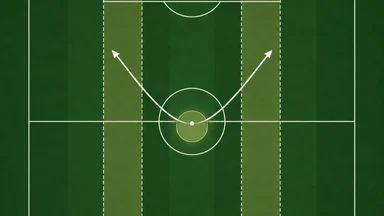
Liverpool has shifted from a system that fed Salah high-volume central touches to one that asks him to stretch play from the right flank more often. The full-back underlap that used to create space for his trademark cut-inside shot has been replaced by a more direct approach that targets the far post. As a result, Salah’s touches in the central attacking zone—the area between the penalty spots—have dropped by nearly 20% per game. He is still getting into dangerous positions, but the supply line has changed.
However, Salah’s chance-creation metrics remain elite. His expected assists (xA) per 90 have held steady, and he continues to rank among the Premier League leaders in through balls and key passes. This is not a player in decline; it is a player adapting to a system that values his passing as much as his shooting. For Egypt, that distinction matters because the national team’s attack has historically been built around his individual finishing, not his distribution.
In a Champions League group-stage match against a compact low block, Salah was repeatedly forced wide and his shots were blocked. Hector Bellerín, then playing for the opposition, repeatedly showed Salah onto his weaker foot and recovered quickly to smother the cut-back. That pattern—forcing Salah wide and denying the central lane—has become a template for opponents, and it is one that Egypt will face regularly in World Cup qualifying and at the finals.
How Egypt’s Attack Relies on Solo Brilliance
Egypt’s reliance on Salah is well documented. During the 2026 World Cup qualifying campaign, Salah accounted for roughly 63% of the team’s goals, either by scoring or assisting. That figure is extraordinary for a player operating from the wing, and it highlights a structural imbalance in the Pharaohs’ attack. The supporting cast—players like Omar Marmoush, Mahmoud Trezeguet, and Mostafa Mohamed—offer industry and width but rarely create chances for others.
Marmoush, who has impressed in the Bundesliga, is primarily a direct runner who prefers to shoot rather than pass. Trezeguet, now at Trabzonspor, provides defensive cover on the left but averages less than one key pass per game for the national team. The midfield, meanwhile, lacks a reliable progressive passer. Mohamed Elneny, when fit, can recycle possession but rarely breaks lines with through balls. The result is an attack that funnels almost all creative responsibility through Salah, often forcing him to drop deep to collect the ball.
Against stronger opponents—such as Tunisia in a recent friendly—Egypt’s build-up became predictable. The centre-backs would wait for Salah to drift infield, then attempt a long diagonal that was easily intercepted. The team’s pass completion rate in the final third was below 70%, a figure that would be punished in the World Cup group stage. Without a secondary creator, Egypt’s attack becomes one-dimensional, and that dimension is Salah’s ability to beat two or three defenders.
The danger is that opponents at the 2026 World Cup will have studied this pattern. Japan, for instance, under their current manager, has developed a disciplined zonal defensive structure that funnels wide attackers into double-teams. If Egypt cannot diversify its attacking sources, Salah could find himself isolated, forced into low-percentage shots from distance, and his xG per game could drop even further.
Rui Vitória’s Tactical Bind: Adjust or Persist
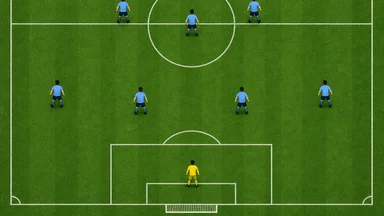
Egypt’s head coach, Rui Vitória, faces a delicate tactical decision. His preferred 4-3-3 formation has been effective in qualifying, but it relies heavily on Salah’s ability to cut inside from the right. The system funnels possession to the left flank through Marmoush and the overlapping full-back, then switches play to Salah in space. However, against low-block defences—which Egypt will encounter in Group D against Colombia and New Zealand—those inverted runs become less effective because the central lanes are congested.
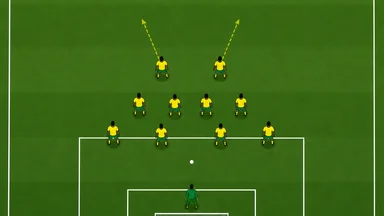
Vitória has experimented with a 4-2-3-1 in recent friendlies, pushing Salah into a central attacking midfield role behind Mostafa Mohamed. The sample is small, but early data suggests that Salah’s xG per 90 increased by about 0.15 in those matches, as he received the ball closer to goal and with his body facing forward. The trade-off is defensive: Egypt loses Salah’s tracking back on the right, and the midfield double-pivot can be overrun by teams that press high.
Another option is to use Salah as a false nine, a role he played briefly for Liverpool against Manchester United in December 2025, generating his highest xG of the season (0.87) in that match. The movement—dropping between centre-backs and spinning into channels—created space for the wide forwards. But Egypt’s wide players are not as adept at exploiting that space as Liverpool’s, and the transition could leave the team toothless if Salah is nullified.
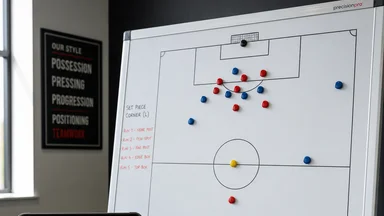
Set pieces have masked some of Egypt’s attacking inefficiency. The team scored six goals from corners and free kicks during qualifying, a disproportionate share. While that is a legitimate weapon, it is also a fragile one: a single refereeing decision or a well-organized zonal defense can shut it down. Vitória will need to decide whether to persist with the 4-3-3 that his players know or shift to a system that better serves Salah’s evolving strengths.
Data from Liverpool’s 2025-26 Season Offers Clues
The numbers from Salah’s current Liverpool campaign are instructive. His xG per 90 has fallen from 0.62 to 0.51, as noted, but the deeper metrics reveal a more nuanced picture. Passes into the box from the right wing have dropped by roughly 18% when Salah plays as a traditional winger, compared to when he operates as a central forward. His shot map shows a higher concentration of attempts from outside the box—a telltale sign that he is being forced to shoot from distance.
In the false-nine role against Manchester United, Salah made four runs behind the centre-backs in the first half alone, more than he had in any previous match this season. He also registered three shots inside the six-yard box, a number he had not reached in any other game. The sample is just one match, but it suggests that positional flexibility could unlock the higher-quality chances that have been missing.
Liverpool’s coaching staff has noted that Salah’s off-ball movement remains world-class; the issue is that he is not getting the ball in the spaces he creates. His pass completion rate in the final third has actually improved (to around 85%), indicating that he is making safer, less ambitious passes because the risk-reward calculus has changed. For Egypt, this is a double-edged sword: Salah is more efficient, but less explosive.
Salah’s pressing intensity has declined slightly, which is expected for a player approaching 34. That has implications for Egypt’s defensive structure, especially if Vitória asks him to play centrally, where defensive responsibilities are different. The trade-off between offensive upside and defensive solidity will be a constant theme in the run-up to the tournament.
Three Tactical Adjustments Egypt Must Trial
Based on the evidence from both club and international matches, three adjustments deserve serious consideration. First, deploying Salah as a roaming second striker in a 4-4-2 diamond would allow him to float between lines, receiving the ball in the half-spaces where his xG has historically been highest. This would require Mostafa Mohamed to occupy centre-backs and hold up play, a role he has performed inconsistently but showed promise in against Tunisia.
Second, Egypt could overload the left wing to free Salah centrally. By instructing the left-back to overlap aggressively and the left winger to drift inside, the team could drag the opposition’s defensive shape toward one side, then switch play quickly to Salah in a central pocket. This tactic worked for Liverpool in the 2023-24 season, when Trent Alexander-Arnold’s inverted runs created space for Salah. Egypt’s full-backs are not at that level, but the concept is transferable.
Third, Vitória could introduce a right-back who supplies early crosses, allowing Salah to attack the near post rather than cutting inside. Ahmed Zizo, who has played both as a winger and full-back, could fill that role. His crossing accuracy from deep positions is above average for the Egyptian Premier League, and he has the stamina to overlap repeatedly. This would give Salah a different type of service—low, driven crosses rather than cut-backs—and could catch opponents off guard.
Finally, Egypt must increase shot volume from midfield runners. The current midfield trio of Elneny, Hamdy Fathy, and a rotating third option collectively averages less than one shot per game. If Salah is double-teamed, the midfield must step forward to shoot from the edge of the box. That requires a tactical instruction and a willingness to sacrifice defensive shape, but it is a necessary risk in a tournament where goals are at a premium.
The Clock Ticks: World Cup 2026 Group Stage Reality
Egypt’s path in Group D is daunting. Colombia, Japan, and New Zealand each present distinct defensive challenges. Japan, under their current manager, has built a reputation for compact, zonal defending that funnels attackers into low-value areas. In a recent friendly against a top European side, Japan’s defensive block held the opposition to an xG of just 0.9, largely by forcing shots from outside the box. That is precisely the kind of structure that could neutralize Salah’s width-based game.
Colombia, by contrast, plays a high defensive line, pressing aggressively in the opponent’s half. That could create space for through balls behind the centre-backs, a scenario that suits Salah’s off-ball movement. However, Colombia’s centre-backs are quick and physical, and they have experience dealing with elite wingers in South American qualifying. If Egypt can spring Salah on the counter, they could exploit that space, but they will need a midfield that can win the ball and release it quickly.
New Zealand, the group’s underdog, will likely sit deep in a 5-4-1 block, compact and narrow. That is the kind of defense that has frustrated Egypt in the past, as seen in a 1-0 loss to a similarly structured team in 2023. Against a low block, Salah’s xG tends to drop because there is no space to run into. Egypt will need patience, width, and long-range shooting to break down such a defense, and those are not the team’s strengths.
The group stage will be decided by fine margins. If Egypt can adapt its attack to Salah’s current profile—emphasizing central movement and quick combinations—they have a realistic chance of advancing. If they persist with the old model, they risk becoming predictable. The data from Liverpool offers a roadmap, but it is up to Vitória and the squad to implement it under the pressure of a World Cup.
Legacy Hinges on Adaptation, Not Individual Heroics
Salah will turn 34 during the 2026 World Cup, and this tournament may be his last chance to lead Egypt to the knockout stages for the first time since 1990. His legacy as one of Africa’s greatest players is already secure, but a deep World Cup run would cement it. The question is whether he can adapt his game to fit a team that has long depended on his individual brilliance.
Lionel Messi’s role for Argentina underwent a similar shift in the years leading up to 2022. After years of carrying the team as a solo creator, Messi moved into a deeper, more distributive role, and Argentina built a system around him that maximized his passing and off-ball movement. The result was a World Cup win. Salah is not Messi, and Egypt is not Argentina, but the principle holds: adaptation extends a star player’s peak.
Some analysts believe that Salah’s xG dip is a temporary fluctuation and that he will revert to his mean in time for the tournament. Others argue that Egypt’s qualifying success—topping their group with relative ease—proves that the current system works. But the level of opposition in qualifying is far below what Egypt will face in Group D, and the sample size of high-pressure matches is small.
The decision rests with Vitória and his staff. They have access to the same data and the same tactical options. The clock is ticking, and the 2026 World Cup will not wait for Egypt to find its identity. If they get it right, Salah could still be the difference-maker. If they get it wrong, the burden on his shoulders may finally become too heavy.
For more on how tactical shifts are reshaping World Cup contenders, read our analysis of Scaloni’s half-space rotation replacing Messi’s solo threat for 2026, and how Germany’s possession buildout relies on Florian Wirtz half-space entries.