48-Team Group Stage Doubles Rotation Risk for Squad Selectors
When FIFA confirmed the expansion to 48 teams for the 2026 World Cup, the immediate reaction centered on the spectacle: more nations, more matches, more global representation. But for the coaches and analysts tasked with building a squad capable of lifting the trophy, the structural change introduces a fundamentally different puzzle. The old 32-team format, with its four-team groups and predictable knockout path, allowed managers to sequence their line-ups with relative clarity. The new 48-team model, built around three-team groups and a round of 32, compresses the schedule, reduces margin for error, and forces rotation earlier than ever before. This is not merely a bigger tournament; it is a different kind of endurance test.
48 Teams Means 72 Group Matches – And a Logistical Chess Match
The arithmetic is straightforward but its implications are not. Under the 32-team format, the group stage produced 48 matches across 12 days. In 2026, with 48 teams divided into 16 groups of three, the group stage alone will feature 72 matches. That increase of 24 fixtures does not come with extra rest days. FIFA's current proposal, as outlined in the match calendar released in early 2024, maintains roughly the same group-stage window of 12 to 13 days. More matches packed into the same span means every team will play on a tighter rotation—two group matches over roughly eight days, followed by a knockout round that begins within 72 hours of the group finale.
The knock-on effect for squad selection is immediate. In previous tournaments, a manager could rely on a core of 14 to 15 players to carry the load through the group stage and into the knockout rounds. With six rest days eliminated from the overall calendar compared to the 2018 format, that luxury disappears. Teams that reach the final will play seven matches in roughly 30 days, the same number as before, but with shorter recovery windows between the group stage and the round of 32. The margin for injury and fatigue shrinks, and the value of a player who can start two matches in four days increases.
Logistically, the expanded group stage also creates a challenge for training and recovery scheduling. Teams will need to plan travel between venues with less downtime, and the coaching staff must decide how to allocate limited training sessions. Under the old format, a team that won its first two matches could rest key players in the third group game. In a three-team group, there is no third group game—only two matches, both critical for qualification. The luxury of rotation within the group stage all but disappears.
Consider the travel demands: with matches spread across 16 venues in three countries—the United States, Canada, and Mexico—some teams may face cross-continental flights between group games. For example, a team playing its first match in Vancouver and its second in Mexico City would cover roughly 4,000 kilometers, with a recovery day in between. That travel burden, combined with the compressed schedule, amplifies fatigue beyond what match minutes alone would suggest. Coaches must factor in jet lag and climate shifts when planning line-ups.
The Three-Team Group: Fewer Games, Higher Stakes, Less Margin
The switch from four-team to three-team groups is the most radical alteration to the tournament's fabric since the introduction of the round of 16 in 1986. Each team plays only two group matches instead of three, which reduces the total number of group-stage appearances but raises the stakes of every result. A single loss can be catastrophic, and a draw leaves a team vulnerable to goal-difference tiebreakers. According to a 2024 simulation by the CIES Football Observatory, the probability of a group finishing with all three teams on three points—each with one win and one loss—is roughly 12 percent, meaning tiebreakers will decide nearly one in eight groups.
For squad selectors, this creates a difficult tension. In a two-match group, every minute of playing time matters for goal difference. A manager cannot afford to rest a star striker in the second match if the first result was narrow, because a single goal could be the difference between advancing and going home. Yet playing key players in both group matches, especially if the second is a dead rubber (possible only if the first two results are decisive), risks fatigue ahead of the knockout rounds.
The compressed group stage also changes substitution strategy. With only two matches to secure qualification, managers may be tempted to use their five substitutes earlier in each game to preserve legs. But early substitutions can disrupt rhythm and tactical cohesion. The 2022 tournament showed that teams like Argentina, who made five changes against Poland in the group stage, used the third group match to rest starters. That option disappears in 2026, forcing managers to treat each group match as a knockout in disguise.
There is also a psychological dimension: in a three-team group, the second match is always decisive. If a team wins its opener, the second match is a chance to seal qualification; if it loses, the second match is a must-win. There is no middle ground. This pressure can lead to overly cautious tactics or, conversely, reckless attacking. Coaches must prepare their squads for both scenarios, which requires mental resilience training alongside physical preparation.
From 23 to 26 Players: The Extra Slots Mask a Deeper Problem
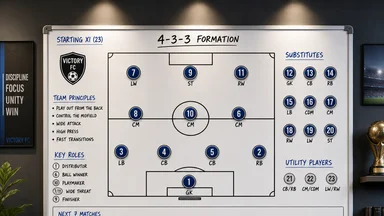
FIFA has proposed expanding squad sizes from 23 to 26 players for the 2026 tournament, a move that appears to address the increased physical load. Three extra slots allow managers to carry additional specialists—a third goalkeeper, a versatile defender, a pacey winger—without sacrificing depth in any position. On its face, this seems like a straightforward solution: more players to share the minutes.
But the extra slots mask a structural issue. The expanded squad does not change the fact that only 11 players can start a match, and the substitution limit remains at five per game. The additional three players are unlikely to see significant minutes unless injuries mount. In practice, the 26-player squad will likely function as a 23-player core with three emergency reserves, similar to how the 23-player squad in 2014 often had two or three players who never left the bench. The real rotation pressure falls on the 14 to 16 players who form the match-day nucleus.
Moreover, the yellow-card rule adds another layer of selection complexity. Under current FIFA regulations, players who receive two yellow cards by the end of the quarter-finals serve a one-match suspension. With more matches crammed into the same window, players on a yellow card face a heightened risk of missing a knockout match if they are forced to play in the round of 32. Managers must decide whether to rest a cautioned player in a group match, potentially jeopardizing qualification, or risk a suspension that could derail a knockout run.
Consider a hypothetical scenario: a key midfielder picks up a yellow card in the first group match. The manager faces a choice: rest him in the second group match to avoid a potential suspension, or play him and risk a second yellow that would rule him out of the round of 32. In the old format, the manager could use the third group match to rest him, but now there is no such buffer. This decision is compounded by the fact that the round of 32 is a single-elimination match where any slip-up ends the tournament. The margin for error in squad management has shrunk dramatically.
Round-of-32 Scheduling: Four Matches in 12 Days
The introduction of a round of 32 is the single most demanding addition to the calendar. Under the 32-team format, group winners advanced directly to the round of 16, with a gap of at least four days between the final group match and the knockout opener. In 2026, the round of 32 will be played roughly 72 hours after the group stage concludes. For example, Group A's final match is scheduled for June 18, and the round-of-32 match for the group winner takes place on June 20. That leaves one full rest day for travel, recovery, and tactical preparation.
For teams that qualify from the group stage, the schedule becomes a brutal sprint. A team that reaches the final will play four matches in the first 12 days of the knockout phase—round of 32, round of 16, quarter-final, semi-final—before the final on July 19. That density of matches, combined with the North American summer heat in venues like Dallas, Mexico City, and Toronto, places an extraordinary premium on squad depth. The first-choice XI cannot realistically start all four knockout matches without a significant drop in intensity.
The scheduling also forces managers to think about the round of 32 before the group stage ends. A team that clinches early qualification might rest players in the second group match, but that risks losing momentum and dropping to a lower seeding. Conversely, a team that scrapes through on goal difference will have played its best XI in both group matches and then face a rested opponent in the round of 32. The asymmetry of preparation creates a strategic dilemma that did not exist in the 32-team format.
To illustrate, take a team like Germany in 2014, which won its group with two matches to spare and rested several starters in the third group game. That rest contributed to their strong knockout run. In 2026, a team that wins its first group match could rest players in the second match if qualification is secured, but the second match is still crucial for seeding. The risk of losing momentum must be weighed against the benefit of rest. Some managers may choose to field a weakened team in the second group match, accepting a lower seed in exchange for fresher legs in the round of 32. This trade-off is a new strategic variable.
Case Study: 2022 Argentina's Late-Game Rotation Under 32 Teams
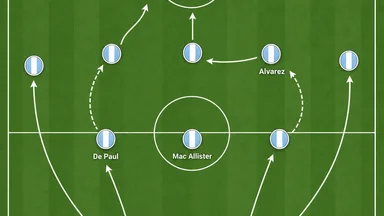
Argentina's 2022 World Cup campaign offers a useful benchmark for how the expanded format changes squad management. Lionel Scaloni made five changes to his starting XI for the final group match against Poland, resting key players like Ángel Di María and Rodrigo De Paul after the shock loss to Saudi Arabia. That rotation allowed Argentina to enter the knockout rounds with fresher legs, and they subsequently fielded an unchanged XI for the round of 16, quarter-final, semi-final, and final—three matches in 11 days.
Under the 48-team format, that approach would be risky. Argentina's round-of-16 match would have come within 72 hours of the Poland game, leaving less recovery time for the rotated players. Furthermore, an unchanged XI for three knockout matches in 11 days would be even more taxing when preceded by a compressed group stage. Lionel Messi played all 690 possible minutes in 2022, a workload that was manageable because of the four-day gaps between knockout matches. In 2026, those gaps shrink to three days, and the round of 32 adds an extra match.
Scaloni's rotation strategy worked because the third group match allowed a controlled rest. Without that buffer, managers must decide whether to rest players in the second group match—a higher-stakes decision—or accept that key players will be fatigued by the quarter-finals. The 2026 format favors squads with multiple players capable of performing at a similar level, rather than a clear first XI and a drop-off.
Another example is France in 2018, where Didier Deschamps used a settled XI for most of the knockout stages. In 2026, such consistency may be impossible. Managers will need to rotate more aggressively, potentially using different starting XIs for the round of 32 and round of 16. This requires a squad where the second-choice players are nearly as good as the first-choice, a luxury that only the deepest national teams possess.
Data-Driven Selection: The 18-Player Core Model
Analytics firms and national federations are already modeling the optimal squad composition for the expanded format. Twenty3, a football analytics consultancy, has proposed an 18-player core model: a group of players expected to start five or more matches over the tournament, with the remaining eight squad members rotating as tactical options or injury cover. The core would include two goalkeepers, six defenders, six midfielders, and four forwards—a distribution that prioritizes versatility over specialist depth.
Positional versatility becomes a key selection criterion. A player who can cover two positions—like Benjamin Pavard, who played both centre-back and right-back for France in 2018—offers more value than a specialist who can only play one role. In a 26-player squad, carrying a pure left-back who cannot play on the right is a luxury that few managers can afford. The data suggests that teams with more multi-position players tend to have shorter recovery times between matches, because they can rotate without changing formation.
Managers must also prepare two distinct tactical systems during the pre-tournament training camp. One system for the group stage, where matches are more frequent and rotation is forced, and another for the knockout rounds, where the first-choice XI can be deployed more consistently. This dual-preparation approach requires additional training time and places a premium on tactical flexibility among players. As we discussed in our earlier analysis of 26-player squads, the ability to switch formations mid-tournament without a drop in execution will separate contenders from participants.
Some critics argue that the expanded squad size is a cosmetic fix that does not address the core issue of match congestion. They point out that in club football, teams with deep squads often rotate heavily during congested periods, but national teams have limited time to build chemistry. The 18-player core model attempts to balance depth with cohesion, but it remains to be seen whether such a model can be implemented in the high-pressure environment of a World Cup. The counter-argument is that the extra three players allow managers to include specialists for specific match-ups, such as a tall defender to counter aerial threats or a fast winger for counter-attacking scenarios. This tactical flexibility could be decisive in close knockout matches.
Practical Takeaways for National Team Coaches
For coaches preparing for 2026, the implications are concrete. First, prioritize multi-position players in the final squad. A defender who can play across the back line, or a midfielder who can drop into defense, provides flexibility that a specialist cannot. Second, schedule pre-tournament friendlies with three-day gaps to simulate the tournament's load pattern. Training camps should include back-to-back matches with minimal recovery to acclimate players to the compressed schedule.
Third, use substitutions earlier in group-stage matches. In the 32-team format, managers often waited until the 70th minute to make changes. In 2026, introducing fresh legs around the 60th minute can preserve energy for the knockout rounds without sacrificing match control. Fourth, monitor player fatigue using GPS data and wellness questionnaires throughout the season, not just during the tournament. National team coaches must collaborate with club medical staff to identify players who have accumulated high workloads before the World Cup begins.
Finally, prepare a 'knockout-only' tactical plan from day one. The group stage and knockout rounds are essentially different competitions under the 48-team format. A team that excels in the group stage by pressing high and running hard may need to adopt a more conservative, possession-based approach in the knockout rounds to manage energy. That dual identity must be practiced, not improvised. The 2026 World Cup will reward the managers who plan for seven matches, not just the final.
In addition, coaches should consider the mental toll of the compressed schedule. Sports psychologists can help players cope with the pressure of high-stakes matches with minimal recovery. Teams that invest in mental preparation may gain an edge over opponents who focus solely on physical conditioning. The 2026 World Cup will test not only the legs but also the minds of players and coaches alike.