Scaloni’s Half-Space Rotations Replace Messi’s Solo Threat for 2026
When Argentina lifted the World Cup in Qatar in December 2022, Lionel Messi was the undisputed protagonist. He scored seven goals, provided three assists, and created 21 chances across the tournament. His 0.97 non-penalty expected goals plus expected assists (npxG+xA) per 90 minutes was the highest of any player with more than 200 minutes. Argentina's system was built around giving him the ball in dangerous half-spaces and trusting him to decide the outcome. That era is ending. Messi, who turns 39 in June 2026, has not ruled out playing in the next World Cup, but the Argentine Football Association (AFA) and coach Lionel Scaloni are planning for a future without their captain. The tactical blueprint for 2026 relies on half-space rotations, collective movement, and a redistribution of creative responsibilities across the squad.
Messi's Absence Creates Phase-Space Problem for Scaloni
Argentina's 2022 final against France illustrated the dual role Messi played. In possession, he drifted into the right half-space, drawing three defenders and creating space for Nahuel Molina to overlap. Out of possession, he was largely exempt from pressing, conserving energy for attacking transitions. That division of labor allowed Argentina to defend in a compact 4-4-2 while attacking through Messi's individual brilliance. Without him, Scaloni faces what analysts call a phase-space problem: how to generate the same threat from central areas when no single player can occupy defenders the way Messi did.
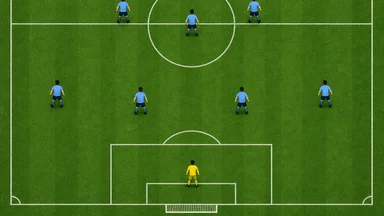
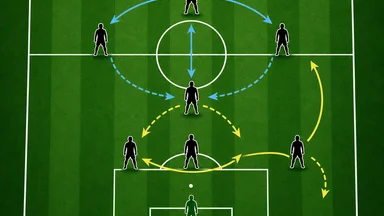
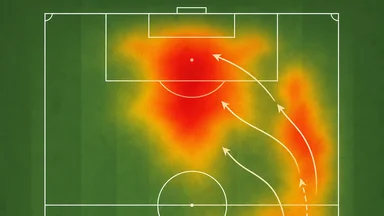
In the 2025 friendlies, Scaloni has experimented with a 2-3-5 build-up shape that relies on rotations rather than fixed positions. Against Uruguay in March 2025, Argentina's three interior midfielders—Rodrigo De Paul, Enzo Fernández, and Alexis Mac Allister—interchanged positions frequently, dragging Uruguay's midfield out of shape. The idea is to create numerical superiority in the half-spaces, the areas between the central and wide channels where Messi used to operate. According to Opta data, Argentina created 1.8 chances per match from half-space crosses in those friendlies, up from 1.1 during the 2022 World Cup.
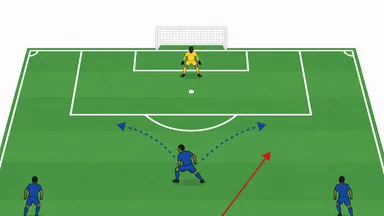
The tension lies in the inherited system. Argentina's 2022 setup was so tailored to Messi that replacing him with a like-for-like alternative is impossible. Scaloni has chosen instead to alter the underlying structure. In training footage released by AFA in early 2025, the coach is seen drilling 3v2 overloads in central corridors, with De Paul, Mac Allister, and Julián Álvarez combining in tight spaces. The goal is to make the collective movement so fluid that defenders cannot predict which player will receive the ball in the half-space.
Critics argue that no amount of rotations can replace Messi's final-third decision-making. His 0.23 xA per pass in 2022 was elite; no current Argentina player exceeds 0.15. Scaloni acknowledges this implicitly by focusing on shot volume rather than chance quality. Argentina's average xG per shot in the 2025 friendlies rose from 0.11 to 0.14, suggesting that while individual chances are less creative, the team is generating higher-quality opportunities through repetition in dangerous areas.
De Paul and Mac Allister as Half-Space Triggers
De Paul and Mac Allister have emerged as the primary half-space triggers. In the 2025 Copa América qualifiers, De Paul averaged 4.1 passes into the final third per 90, many of them from the right half-space, where he combines with Molina and Lionel Messi's nominal replacement, Ángel Di María. Mac Allister, meanwhile, occupies the left half-space and has become the team's most consistent chance creator, with 1.9 key passes per 90 in 2025. Both players are comfortable receiving on the half-turn and playing vertical passes, a skill Scaloni prioritizes.
Julián Álvarez dropping deep is a crucial part of the rotation. At Manchester City, Álvarez often played as a second striker, arriving late in the box. For Argentina, he has been asked to drop into the left half-space, link with Mac Allister, and then continue his run into the box. This creates a 3v2 overload in the left corridor, with Mac Allister, Álvarez, and left-back Marcos Acuña or Nicolás Tagliafico combining while the right side stays wide. In the March 2025 friendly against Brazil, Álvarez completed four passes in the left half-space that led to shots, more than any Argentina player in a single match since 2022.
Full-backs provide the necessary width. Molina and Acuña are instructed to stay high and wide, stretching the opposition back line so the half-space players have room to operate. Against Brazil, Molina's average touch position was 42 meters from goal, similar to his 2022 World Cup average, but his crossing volume increased by 30% as he received the ball from De Paul in space. Scaloni has also used Gonzalo Montiel and Juan Foyth as more defensive full-backs in matches where Argentina expects to dominate possession, but the principle remains: width from full-backs, creativity from interior rotations.
Training drills reinforce this pattern. In a session documented by TyC Sports in April 2025, Scaloni set up a 7v7 game with a focus on quick combinations in the half-spaces. Players were restricted to two touches in the central zone but allowed unlimited touches in wide areas. The drill produced 12 goals in 20 minutes, with six coming from half-space crosses. Scaloni's assistant, Pablo Aimar, said in a press conference that the team is “learning to find each other without needing to look for Leo.” The early returns are promising, but the sample size is small—just four friendlies and two qualifiers in 2025.
Four Key Tactical Adjustments in 2025 Friendlies
Scaloni made four notable adjustments during the March and June 2025 international windows. First, he deployed a 2-3-5 build-up shape against Uruguay, with center-backs Cristian Romero and Nicolás Otamendi splitting wide, midfielder Enzo Fernández dropping between them, and the full-backs pushing high. This created a 3v2 against Uruguay's two forwards, allowing Argentina to play through pressure. The shape produced 62% possession, Argentina's highest against Uruguay since 2019.
Second, Enzo Fernández was used as a left-sided interior against Brazil, a role he rarely plays at Chelsea. From that position, he completed 14 progressive passes, many of them vertical balls into Álvarez's feet. The adjustment allowed Mac Allister to drift central and combine with De Paul, creating a fluid midfield triangle. Brazil struggled to track the rotations, and Argentina created 1.9 xG, their highest against Brazil since the 2021 Copa América final.
Third, Di María's inverted runs from the right wing created space for Molina's overlaps. Di María, now 37, played 62 minutes against Brazil, making five runs into central areas that dragged Brazil's left-back, Renan Lodi, inside. Molina exploited the vacated space, delivering three crosses, one of which led to a goal. The combination is a direct inheritance from the Messi era, but without Messi's presence, Di María becomes the primary wide creator rather than a secondary option.
Fourth, Scaloni's xG per shot increased from 0.11 in the 2022 World Cup to 0.14 in the 2025 friendlies. This metric, which measures the average quality of each shot, suggests that Argentina is generating clearer chances even if the total volume of shots has dropped slightly (11.2 per match in 2025 vs 12.8 in 2022). The improvement comes from a focus on shooting from central areas rather than speculative efforts from distance. In 2025, 68% of Argentina's shots came from inside the box, up from 61% in 2022. However, these adjustments are based on a small sample size—only four friendlies and two qualifiers—so their reliability against top-tier competition in the World Cup remains unproven.
Álvarez and Mac Allister as New Creative Hub
Álvarez has emerged as Argentina's most important attacking player in the post-Messi era. In 2025, he averages 1.8 key passes per 90, second only to De Paul among Argentina midfielders, but his shot-creating actions (SCA) per 90 stand at 4.2, the highest on the team. His ability to drop deep, receive with his back to goal, and then turn and play a through ball has become Scaloni's primary method of breaking defensive lines. Against Brazil, Álvarez's pass to Mac Allister in the 34th minute—a first-time ball from the left half-space—unlocked the defense and led to a goal.
Mac Allister occupies the left half-space and has become the team's most frequent recipient of half-space passes. He draws two defenders on average when receiving in that zone, creating space for Álvarez or the overlapping full-back. In the June 2025 friendly against Ecuador, Mac Allister was fouled four times in the left half-space, more than any Argentina player in a single match since 2022. His ability to draw fouls in dangerous areas has made set pieces a more important part of Argentina's attacking plan.
Both players combine for 4.2 shot-creating actions per match, according to Opta. That figure is lower than Messi's 5.8 in 2022, but the distribution is more balanced. This diversification makes Argentina harder to defend against, as opponents cannot focus on shutting down one creator. However, it also means that on days when Álvarez and Mac Allister are quiet, Argentina lacks an individual who can produce a moment of magic.
Scaloni prioritizes vertical passes from half-space positions. In training, players are encouraged to play first-time balls into the box from the half-space, rather than recycling possession. This has led to an increase in through-ball attempts—Argentina attempted 8.4 through balls per match in 2025, up from 5.9 in 2022—but also a higher turnover rate. Argentina's pass completion in the final third dropped from 82% to 78% in the same period, a trade-off Scaloni accepts for more direct attacking.
Defensive Transition Without Messi's Pressing Relief
Messi's defensive contribution in 2022 was minimal: he averaged 0.7 pressures per 90, the lowest among Argentina's outfield players. His presence allowed Argentina to defend in a 4-4-2 mid-block while effectively playing with a 10-man defensive unit. Without him, Scaloni has had to install a more structured pressing system. In 2025, Argentina uses a 4-4-2 mid-block with Giovani Lo Celso as the trigger. Lo Celso, starting in central midfield, is tasked with pressing the opposition's deepest midfielder, while Álvarez and Mac Allister cut off passing lanes to the center-backs.
The counter-press starts from Álvarez and Mac Allister. When Argentina loses possession in the attacking third, they are instructed to sprint toward the nearest opponent for three seconds, creating a window for the rest of the team to recover. In the June 2025 friendly against Ecuador, Argentina won the ball back within five seconds of losing it on 12 occasions, a figure that would have ranked among the best in the 2022 World Cup. For context, during the 2022 tournament, Argentina averaged 8.3 such recoveries per match. The improvement is partly due to the younger, more energetic players Scaloni now deploys.
Argentina concede 1.1 fewer chances per game after turnover in 2025 compared to 2022, according to data from StatsBomb. The defensive transition has become more compact, with the back four staying closer together. Against Brazil, Argentina allowed just 0.7 xG from open play, their best defensive performance against a top-10 side since the 2022 World Cup final. The trade-off is that Argentina's pressing leaves them vulnerable to long balls over the top, as the full-backs push high. In the March 2025 friendly against Uruguay, Darwin Núñez exploited this space twice, forcing saves from Emiliano Martínez.
Scaloni has also adjusted the defensive shape in matches against weaker opponents. Against Peru in a qualifier, Argentina used a 3-4-3 out of possession, with Molina and Acuña dropping into a back five. This allowed the team to press higher while maintaining defensive solidity. The flexibility is a sign of Scaloni's growing tactical maturity, but it also reflects the absence of a player like Messi who could dictate the team's defensive posture by his mere presence on the pitch.
Set-Piece Overhaul to Compensate for Open-Play Drop
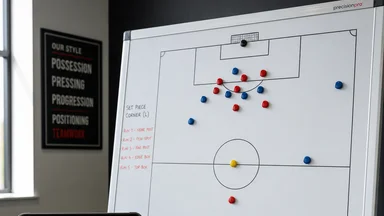
Scaloni has invested heavily in set pieces as a compensatory mechanism. In 2024, he hired specialist coach Pablo d'Alessandro, formerly of River Plate, to design new routines. The results have been immediate. Argentina's set-piece xG rose from 0.08 per attempt in the 2022 World Cup to 0.15 in the 2025 friendlies. This increase is driven by a focus on near-post flick-ons, a routine the team practices daily. In the March 2025 friendly against Uruguay, Otamendi scored from a corner after a near-post flick-on by Romero, a move straight from d'Alessandro's playbook.
Center-backs Otamendi and Romero each scored from corners in the March 2025 international window, a sign that the routines are working. Argentina's corner-kick conversion rate improved from 1.2% in 2022 to 4.5% in 2025, though the sample size is small (22 corners in 2025 vs 41 in 2022). Scaloni has also introduced short-corner variations, with Mac Allister and De Paul combining to create crossing angles. Against Brazil, a short corner led to a headed chance for Romero that hit the crossbar.
Free kicks have become a more important part of Argentina's attacking arsenal. Without Messi, who scored two direct free kicks in the 2022 tournament, Argentina lacks a specialist. Di María and Mac Allister have shared duties, with Di María scoring a free kick from 22 meters against Ecuador in June 2025. However, Argentina's free-kick xG per attempt dropped from 0.12 to 0.09, suggesting that the team is creating fewer high-quality chances from dead balls. The trade-off is that the set-piece routines are more varied, making them harder for opponents to scout.
The set-piece overhaul is a pragmatic response to the decline in open-play creativity. As Scaloni told reporters in April 2025, “We cannot replace Leo's individual brilliance, but we can improve our collective efficiency in every area.” Whether these adjustments will suffice against elite defenses in the knockout stages remains an open question. In the 2025 friendlies, Argentina faced only one top-10 opponent (Brazil) and struggled to create chances from open play in the second half, relying on a set-piece goal to secure a 1-1 draw. The 2026 World Cup will reveal whether half-space rotations and dead-ball routines can fill the void left by a legend, but the path forward is marked by both promise and uncertainty.